
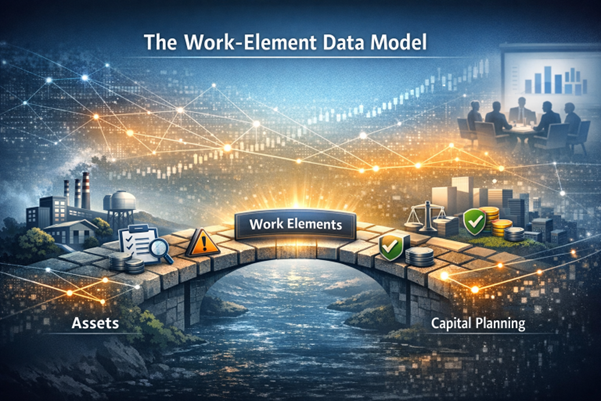
The Work‑Element Data Model: The Missing Link Between Asset Condition and Capital Outcomes
The work‑element data model provides the structural layer that preserves this connection. By defining capital needs as discrete work elements tied directly to assets, organizations can maintain traceability from Facility Condition Assessments (FCAs) through initiatives, portfolio planning, project execution, and reporting. This paper defines the work‑element data model and shows how PMWEB can operationalize it as part of an end‑to‑end capital planning lifecycle.

From Asset‑Driven Needs to Capital Outcomes: Why Modern Capital Planning Requires a Connected Platform
Capital planning rarely starts with projects. It starts with assets, and the growing list of needs uncovered through Facility Condition Assessments (FCAs). But when those needs live across spreadsheets and disconnected systems, organizations lose traceability the moment execution begins: what was approved, what’s funded, what’s being delivered, and what outcomes the spend actually produced. In this article, we outline why modern capital planning must operate at the asset and work-element level, and how a connected platform can link FCA outputs to initiatives, portfolio plans, projects, and financial reporting, turning planning into a continuous, learning cycle that improves decisions year over year.
Read on to see how PMWEB, and the right advisory and implementation approach, connects assets to capital outcomes.

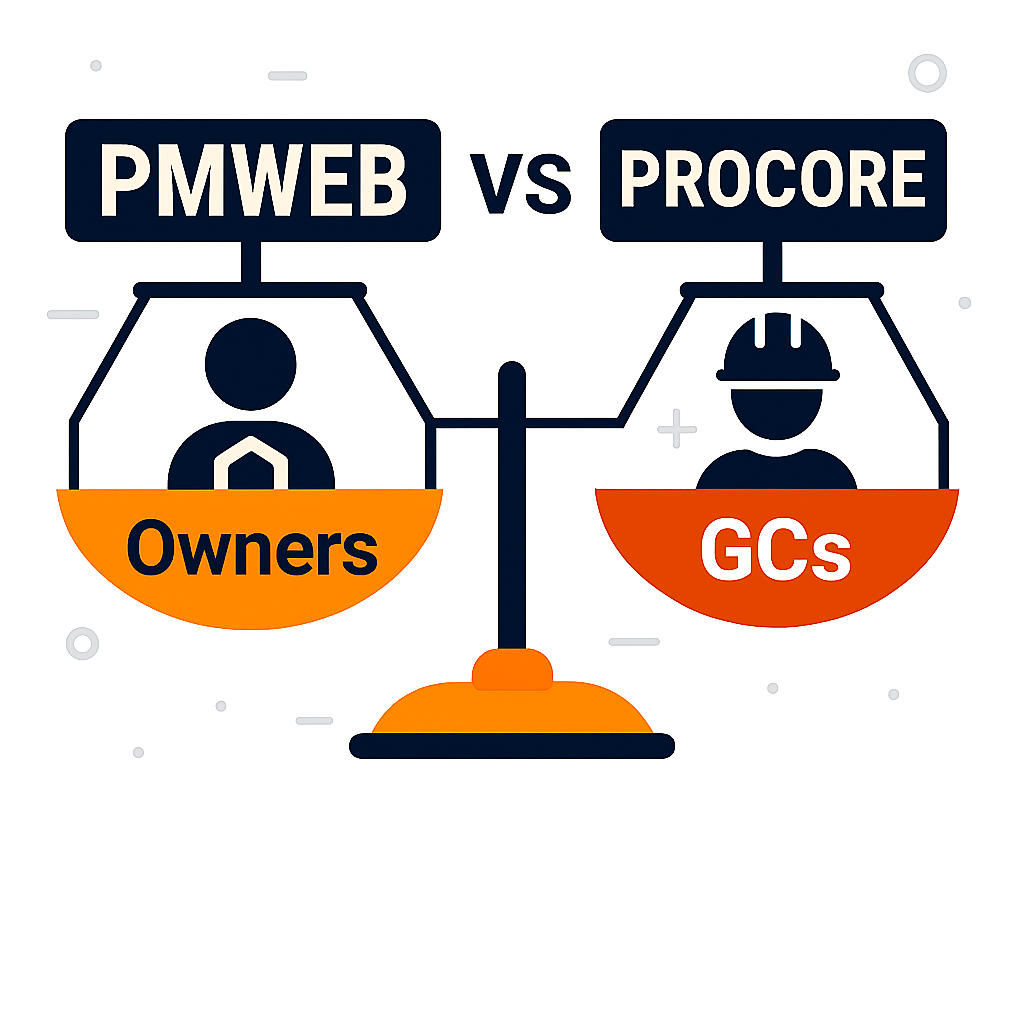
Procore vs PMWeb (Who Reigns Supreme in 2025?)
In this article we compare Procore to PMWEB to see which construction management software is best for owners and PMOs.

Which Construction Management Platform is Best For Owners? (2025)
Seeking the most effective owner-centric solution for construction project management?
Top 5: Procore, PMWEB, Kahua, e-Builder, & Oracle Primavera Unifier.
Gain clarity with an honest, side-by-side comparison from a seasoned expert who has guided hundreds of clients through the evaluation, selection and demonstration process.

Data Chaos? These 5 BI Pitfalls Could Be Holding Your Organization Back
In the world of capital program delivery, data should be your organization’s greatest asset. But too often, it becomes a burden instead—spread across spreadsheets, siloed systems, and a growing mountain of reports that don’t actually help you make decisions.